
Dj
Giddens.
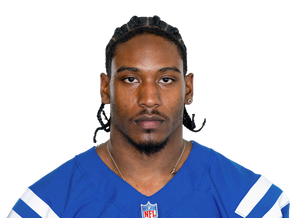
Dj
Giddens.
 Kansas St.· 6'0"· 212 lb· 4.43s 40
"A compact, powerful zone runner whose decisive cuts create yardage on the perimeter, Giddens projects as a valuable committee back if he can consistently break tackles at the next level."Pre-draft read
Giddens is a stride runner. Kansas State fed him outside zone and duo and let him press the tackle, plant and get north, and he did it at 6.0 yards a carry for three years. The best trait is the transition from patience to speed: he does not dance, he waits and then goes.
Once he is clean he covers ground in a hurry, and the testing backs it up. The friction point is contact. He runs tall, which invites hits on the torso and costs him the extra two yards a compact back squeezes out. He is a rhythm runner who needs a scheme to give him a defined crease rather than a back who manufactures one.
The Colts utilize a modern spread RPO system that emphasizes zone runs, play-action, and quick passes, often out of shotgun formations.
Could immediately contribute as a primary backup with situational usage, and eventually develop into a workhorse back within two seasons.
A slow-developing, gap-heavy power run scheme that requires consistent downhill penetration and contact absorption rather than quick cuts.
Giddens' one-cut ability and explosive speed align well with the Colts' zone-heavy RPO scheme, offering immediate value as a change-of-pace runner.
DJ Giddens film session — 2025 NFL Draft
DJ Giddens monster day at Kansas State
DJ Giddens prospect breakdown
Giddens left Kansas State with 3,087 rushing yards and 23 touchdowns on 517 carries, plus 58 receptions — a genuine lead-back workload with efficiency that never dipped. The 2024 season, 1,343 yards at 6.6 a carry, is the tape most evaluators bought.
The athletic profile is better than the position label suggests. At 6-0, 212 with a 4.43 forty, a 39.5-inch vertical and a 7.19 three-cone, he is one of the more explosive backs in the class, and the movement testing shows up as real change-of-direction on tape rather than as a workout number.
What keeps him out of the top three rounds is the finish. He runs high, does not consistently break the first tackle, and his pass protection is a work in progress. In an outside-zone offense that hands him a defined landmark, he is a productive committee starter. Asked to carry an offense on power runs and third-and-short, he is miscast. The three-year sample is large enough to trust: 517 carries is a starter's workload, and the efficiency never dropped as the volume climbed.
- 01
Volume and efficiency
Giddens averaged 6.0 yards per carry on 517 college attempts.
- 02
Decisive one-cut vision
This back displays decisive one-cut vision that fits any wide zone run game.
- 03
Rare explosion testing
He shows rare explosion, testing with a 39.5-inch vertical and a 10-foot-10 broad jump.
- 04
Long strider
Giddens is a long strider who eats cushion once he clears the second level.
- 05
Three-down feel
He has 58 career catches and a functional pass-protection base for three-down work.
- 01
Runs upright
He runs upright and gives tacklers a target on the strike zone.
- 02
Average contact balance
His contact balance is average, as he escapes arms, not shoulders.
- 03
Stalled footwork
Footwork stalls when the first read is walled off.
- 04
Protection technique lags
His pass-protection technique lags behind his willingness.
— — — positional median (p50)
- 40 yd
- 4.43sp50
- Vertical
- 39.5inp50
- Broad jump
- 130inp50
- Three-cone
- 7.19sp50
- Shuttle
- 4.33sp50
- Bench
- —rep
| Yr | Team | G | Att | Yds | TD | Rec | RecYds |
|---|---|---|---|---|---|---|---|
| 2022 | Kansas State | 14 | 89 | 518 | 6 | 8 | 98 |
| 2023 | Kansas State | 13 | 223 | 1226 | 10 | 29 | 323 |
| 2024 | Kansas State | 12 | 205 | 1343 | 7 | 21 | 258 |
| Career | — | 39 | 517 | 3087 | 23 | 58 | 679 |
A dash means the figure is not published by a source we trust — never a zero we invented.
- Avery JohnsonQB24%
- Jayce BrownWR10%
- Tre SpiveyWR7%
#3 of 17 tracked contributors · Production leaned on volume · Offense explosiveness 1.37 (p94) · CFBD — usage x PPA per tracked player
Zone-scheme early-down runner who splits a backfield and finishes runs.
Big-bodied one-cut back with enough contact balance to carry a lead role.
Rotational back whose limited passing-game value keeps him behind a starter.
Everything above is the pre-draft evaluation. This section is what actually happened — updated year over year.
Indianapolis was a scheme match — a wide-zone offense with a defined lead back ahead of him and no pressure to be the answer immediately.
His rookie usage stayed in the backup and situational lane, and that is the expected outcome for a fifth-round back behind an established starter. Nothing about the first season redefined the projection either way.
The evaluation still tracks: the burst and the vision are NFL traits, the pad level and the protection reps are the gate. If he learns to finish runs behind his pads, the committee role becomes a real split. If not, he is a change-of-pace back with good tape and thin volume.