Sanoussi
Kane.
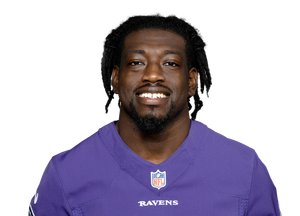
Sanoussi
Kane.
 Purdue· 5'11"· 207 lb
"A four-year Big Ten box safety drafted for the fourth phase: the tackling was ready for Sundays the day Baltimore called his name, and the coverage that would have kept him on defense never caught up to it."Pre-draft read
Kane played the downhill half of Purdue's two-high structure: a box-and-curl safety who spent most of his snaps between eight and twelve yards, reading the guard, and arriving on the ballcarrier with intent. His trigger is the trait. He diagnoses run action fast, angles cleanly through traffic and finishes with his feet under him rather than launching, which is why his tackling stayed efficient as his volume climbed.
The secondary trait is special-teams temperament: he covered kicks with urgency and stacked blocks instead of running around them. Against the pass he is a zone-drop, eyes-on-the-quarterback safety who walls off the seam and rallies. The athletic ceiling is average; the signature is that he never plays a rep at half speed.
Two-high zone base (Quarters/Cover 6) with a defined strong-safety role, in a defense that asks its box safety to fit the run first
Year 1: core four special-teamer and fourth safety who plays base-down box snaps in heavy personnel. Ceiling: rotational strong safety in a quarters defense who owns the alley and the fourth phase.
A single-high, man-heavy defense that asks its safety to travel with slots or play the deep middle alone — the range and the coverage sample were never there.
Value rises in defenses that treat the strong safety as a sixth run defender rather than a matchup coverage piece.
2024 Senior Highlights: DB Sanoussi Kane
Full senior-season cutup showing the downhill trigger, alley fits and open-field tackling.
Sanoussi Kane - In House Answer at Safety: Film Study
Play-by-play breakdown of his run-fit reads and zone drops at Purdue.
Purdue's Sanoussi Kane recaps his pro day
Pro-day interview covering his pre-draft workout and special-teams pitch to NFL teams.
Kane is a run-support safety whose football identity was settled long before the draft: strong-side alignment, box responsibility, tackle first, cover second. He is a compact 5'11", roughly 207-pound defender built for contact rather than range, and everything he does well lives inside twelve yards of the line of scrimmage.
Two years of production carried the case. After a reserve start to his career, he broke through in 2022 with 63 tackles, 3.5 TFL and a sack, then improved as a senior with 79 tackles, 6.0 TFL, a sack and seven pass breakups, the last of those a real jump in ball production for a player who had never recorded an interception. His signature game tape shows him fitting the alley cleanly and stripping at the ball. The flags were equally clear: no career interceptions, limited man-coverage exposure, and a Big Ten body of work built on effort rather than closing speed.
Boards had him as a late Day 3 special-teams projection with a developmental defensive path, and Baltimore drafted him exactly that way at 250, invoking their own Geno Stone precedent. At that pick the call was low-risk and honest about what it was buying: a four-year Big Ten starter's temperament for the fourth phase, with a chance the coverage grows later.
- 01
Downhill trigger
reads run action off the guard and is already moving before the mesh, which is why he consistently meets ballcarriers at or in front of the line.
- 02
Tackling reliability
breaks down under control and finishes with his feet, producing 152 career tackles with very few whiffs in space for a box safety.
- 03
Alley fit discipline
takes the correct angle through traffic and keeps his outside shoulder free, forcing perimeter runs back into pursuit instead of overrunning them.
- 04
Special-teams temperament
covers kicks with urgency, stacks and sheds blockers rather than avoiding them, and profiles as an immediate core-four contributor.
- 05
Steady development
went from 3 tackles as a freshman to 79 tackles, 6.0 TFL and seven breakups as a senior, improving in every measurable box-safety category.
- 01
No ball production
never recorded an interception in four Purdue seasons, a real limitation for a safety whose coverage value has to come from somewhere.
- 02
Range limits
average closing speed shows up on deep-middle assignments; he is a hash-to-hash player, not a true single-high center fielder.
- 03
Man-coverage exposure
thin sample against slots and tight ends, and his hips are tight enough that quick separators can win the first two steps.
- 04
Athletic ceiling
no published combine or pro-day testing, and the tape reads good-not-special, which caps the developmental projection at rotational depth.
| Yr | Team | G | Tkl | Sk | Int | PD | FF |
|---|---|---|---|---|---|---|---|
| 2020 | Purdue | — | 3 | 0 | 0 | 0 | 0 |
| 2021 | Purdue | 13 | 7 | 0 | 0 | 0 | 0 |
| 2022 | Purdue | 14 | 63 | 1 | 0 | 3 | 2 |
| 2023 | Purdue | 12 | 79 | 1 | 0 | 7 | 1 |
| Career | — | 45 | 152 | 2 | 0 | 10 | 3 |
Tackles/TFL/sacks/PD per CFBD regular-season logs; season sums reconcile to career totals (152 tkl, 10 TFL, 2.0 sacks, 10 PD). Career games (45) per Purdue Athletics; 2020 appearance count unpublished. No career interceptions recorded. FF/FR unpublished for 2020 and for 2023 fumble recoveries.
A dash means the figure is not published by a source we trust — never a zero we invented.
Late Day 3 defender who lives on the roster bubble as a teams contributor with occasional defensive spot duty.
Baltimore's own stated precedent: a late-round Big Ten safety who earned defensive snaps after becoming a special-teams staple.
Teams-only safety who never converted kicking-game value into defensive snaps and cycled through practice squads before leaving the league.
Everything above is the pre-draft evaluation. This section is what actually happened — updated year over year.
Baltimore took Kane as a special-teams player and used him as one. He made the 53-man roster as a rookie in 2024 and played essentially the whole season in the kicking game, finishing with five solo tackles and zero defensive impact snaps of consequence. That is the exact rookie year a 250th pick is drafted for. In 2025 the ground shifted: he opened on the roster, was a healthy scratch twice as undrafted rookie Keondre Jackson took over his teams role, and was waived on November 4. He returned to Baltimore's practice squad two days later, was elevated in December, then signed with Tennessee off that practice squad on December 16 amid a wave of Titans safety injuries, finally getting defensive work: seven tackles in two games. The Titans kept him through the 2026 offseason and then waived him with an injury designation on July 30, 2026.
In hindsight this is close to the median outcome for pick 250, not a miss and not a find. Kane did what his profile promised — contribute on teams, tackle when asked — and the ceiling never opened because the coverage never developed. His roster life always depended on being the best available core special-teamer, and once a cheaper undrafted player did that job better, there was no defensive floor to fall back on. Career is still in progress, but the NFL path now runs through camp bodies and practice squads.
Data note: Tackles/TFL/sacks/PD per CFBD regular-season logs; season sums reconcile to career totals (152 tkl, 10 TFL, 2.0 sacks, 10 PD). Career games (45) per Purdue Athletics; 2020 appearance count unpublished. No career interceptions recorded. FF/FR unpublished for 2020 and for 2023 fumble recoveries.