
Bucky
Irving.
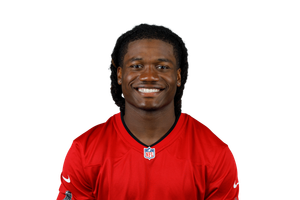
Bucky
Irving.
 Oregon· 5'9"· 192 lb· 4.55s 40
"The testing numbers say fourth round and the tape says otherwise, because nobody in this class turns a two-yard run into six as often as a 192-pound back who refuses to go down on the first hit."Pre-draft read
Irving is a compact one-cut runner who lives in wide and inside zone. He presses the line with patience, lets the double team develop, then jumps the crease with a single decisive plant — no dancing, no wasted steps. The signature is contact balance that has no business belonging to a 192-pound back: he absorbs ankle shots, spins off the first arm and keeps churning through the tackle box.
The second layer is the passing game. He is a natural hands catcher on angle routes, wheels and swings, and Oregon flexed him out to isolate linebackers. His long speed is good, not elite, so most of the explosives come from vision and forced misses rather than pure separation. Pass protection is the honest hole in the profile.
Outside and inside zone offense with a heavy shotgun passing element — a Shanahan/McVay-tree run game that rewards one-cut decisiveness
Year 1: 1B back handling 12-15 zone carries plus every third-down passing snap he can protect on. Ceiling: lead back in a committee that shields him from short yardage and 20-plus-carry workloads.
A gap/power downhill offense that asks him to run behind a pulling guard into a loaded box, or a team that needs its starter to handle goal line and blitz pickup alone.
Keep the carry count near 220 and pair him with a bigger closer; the efficiency stays elite when the volume stays sane.
Bucky Irving 2023 Oregon Highlights
Final college season: zone vision, forced misses and receiving work out of the backfield.
Bucky Irving Highlights vs Colorado 2023 | 2024 NFL Draft Prospect
Single-game cutup showing contact balance and one-cut decisiveness.
Mar'Keise "Bucky" Irving | Minnesota/Oregon Highlights | 2024 Draft Class
Career montage across both programs, from Minnesota freshman work to Oregon lead-back reps.
A Minnesota transfer who became Oregon's engine, Irving is a small, quick-twitch zone back whose game is feel. He sees the front, trusts his eyes and gets north on the first crease, and once he is moving forward, he is far harder to put on the ground than the frame suggests. Every part of the evaluation lives between the tackles and in the flat.
The production backed it. He ran for 699 yards as a freshman in Minneapolis, then went for 1,058 and 1,180 in two Oregon seasons while catching 87 passes for the Ducks. The efficiency was the story — 6.2 yards a carry across three years and elite forced-missed-tackle rates. The flags were physical and testing-based: 5-9 and 192 pounds, a 4.55 forty with a 29.5-inch vertical and a 2.11 RAS, plus pass protection reps where he simply got moved.
Boards liked the tape and discounted the athlete, sorting him as a change-of-pace back in the third-to-fifth range behind the bigger names. Tampa Bay took him at 125 in a backfield with Rachaad White already there and treated the size question as a scheme problem rather than a ceiling. It looked like a rotational bet at the time; the tape said he was more than that.
- 01
Contact balance
Absorbs ankle tackles and glancing shots without losing his feet; the yards after first contact are the single most translatable trait on the tape.
- 02
Zone vision
Presses the line, waits for the double team to climb and hits the crease with one decisive plant instead of dancing behind the down blocks.
- 03
Forced misses in space
A varied juke package and low center of gravity let him win one-on-ones in the open field without needing straight-line speed.
- 04
Receiving back
Natural hands catcher on wheels, angles and swings, with the route feel to be split out and isolated on a linebacker in nickel.
- 05
Efficiency profile
Averaged 6.2 yards a carry across three seasons with back-to-back 1,000-yard years at Oregon while sharing the backfield.
- 01
Pass protection
Willing but overmatched against blitzing linebackers; he gets displaced on contact and needs chip help to stay on the field on third down.
- 02
Testing profile
A 4.55 forty, 29.5-inch vertical and 2.11 RAS mean the explosive-play burst has to come from vision, not from athletic separation.
- 03
Frame and volume risk
At 5-9 and 192 pounds, a 250-carry season is a durability question rather than a plan, and short-yardage work is a poor fit.
- 04
Boom-chasing
Bounces runs that were there inside, occasionally trading four clean yards for a chance at twenty behind an over-pursuing edge.
Relative Athletic Score (Kent Lee Platte) benchmarks combine/pro-day numbers against every measured prospect at the position since 1987. 10.00 is elite; 5.00 is average.
— — — positional median (p50)
- 40 yd
- 4.55sp50
- Vertical
- 29.5inp50
- Broad jump
- 115inp50
- Three-cone
- —s
- Shuttle
- —s
- Bench
- —rep
| Yr | Team | G | Att | Yds | TD | Rec | RecYds |
|---|---|---|---|---|---|---|---|
| 2021 | Minnesota | 12 | 133 | 699 | 4 | 8 | 73 |
| 2022 | Oregon | 13 | 156 | 1058 | 5 | 31 | 299 |
| 2023 | Oregon | 14 | 186 | 1180 | 11 | 56 | 413 |
| Career | — | 39 | 475 | 2937 | 20 | 95 | 785 |
CFBD-verified; season sums match the career line (133+156+186=475 carries, 699+1058+1180=2,937 yards, 4+5+11=20 TD, 95 catches, 39 games). Wildcat passing attempts (2-of-3, 36 yards, 1 TD) are omitted from the RB keys.
A dash means the figure is not published by a source we trust — never a zero we invented.
Efficient committee starter who does damage on zone runs and in the passing game while ceding short yardage.
Undersized zone runner with elite balance and receiving value who became a genuine lead back despite the frame.
Reliable rotational back whose lack of size and testing juice caps him at a steady 800-yard role.
Everything above is the pre-draft evaluation. This section is what actually happened — updated year over year.
Irving was one of the best value picks of the class almost immediately. He passed Rachaad White by midseason as a rookie and finished 2024 with 1,122 rushing yards on 207 carries, eight touchdowns, 47 catches for 392 yards and an All-Rookie selection, doing it at 5.4 yards a pop. Year two was supposed to be the coronation and became a rehab: he was the unquestioned starter from day one, then fought foot and shoulder injuries all fall, missed seven games, never cracked 100 yards in a single outing and finished with 588 yards on 173 carries at 3.4 with one touchdown. Shoulder surgery followed. He opened 2026 camp full-go with no restrictions, back on first-team reps, though Tampa Bay signed Kenneth Gainwell and Todd Bowles has already called him a 1B.
In hindsight, pick 125 for a 1,100-yard rookie is a steal no matter what happens next, and the athletic testing that pushed him to Round 4 was noise the tape had already answered. What is unresolved is the frame. Two seasons in, he has one dominant year and one year lost to soft-tissue and joint damage on a body that was flagged for exactly this. The evaluation was right about the player; the durability question was right too.
Data note: CFBD-verified; season sums match the career line (133+156+186=475 carries, 699+1058+1180=2,937 yards, 4+5+11=20 TD, 95 catches, 39 games). Wildcat passing attempts (2-of-3, 36 yards, 1 TD) are omitted from the RB keys.