Will
Fries.
Will
Fries.
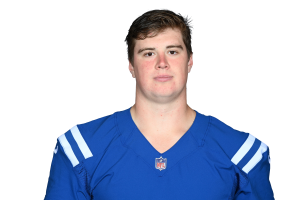
 Penn St.· 6'6"· 309 lb· 5.37s 40
"A 6'6'/309 Penn State four-year starting right tackle with a 9.20 RAS and 46 career starts — a heavy-handed Day-3 pick with a realistic guard conversion projected as a scheme-diverse interior swing."Pre-draft read
Fries is a heavy-handed lineman who plays with square shoulders, a wide base, and consistent independent hand use. In pass protection he sets vertically with a smooth kick-slide, extends his inside hand first, and keeps his outside hand loaded to reset the punch when a rusher tries to swipe. His anchor is legitimate, as he sinks into a compact base against bull rushes and rarely gets walked into the quarterback's lap.
On run downs he is a duo and gap-scheme fit, uncoiling out of a three-point stance with correct pad level, driving through the near number, and finishing with hand replacement. Against interior stunts he passes off cleanly and rarely loses inside leverage. His separator is play strength paired with hand technique: the punch is timed, the recovery is quick, and the finish is real.
His physical make-up and play style fit best in a gap/duo power run game where his footwork can be minimized in space and his power maximized in a phone booth, but his technique is scheme-diverse.
Year 1 depth at multiple positions along the interior line with a ceiling as a long-term starter at right guard.
A wide-zone run blocking scheme that prioritizes dynamic lateral agility and second-level redirection from its offensive linemen.
A scheme-diverse interior offensive lineman with legitimate play strength and hand technique that can develop into a starting guard even with limited lateral agility.
2016 Signing Class Highlights - Will Fries
Game film cut-up of Will Fries's Penn St. tape.
Will Fries football highlights
Game film cut-up of Will Fries's Penn St. tape.
NUC Recruiting Spotlight: Will Fries, Penn State Nittany Lions
Game film cut-up of Will Fries's Penn St. tape.
He projects as a versatile interior developmental body, a hand-fighter with real anchor, correct pad level, and a mean finishing streak. His volume of college reps and athletic testing floor provide a stable base for development. His ability to fit into scheme-diverse interior roles makes him a valuable, low-risk prospect, especially given his 9.20 RAS which measures his full-body movement for his weight class.
Fries made 46 career starts, primarily at right tackle with reps kicked inside. This extensive experience against high-level collegiate competition showcased his durability, learning aptitude, and technical refinement across different alignments. His tape highlighted a pro-ready approach to hand usage and pad level, making him a consistent presence on the field.
Evaluators noted stride-limited recovery in space and average lateral agility for a tackle, leading to a consensus projection for a guard conversion. Though consensus placed him in the late-Day-3 range, his versatility and extensive starting experience appealed to some teams. He was ultimately drafted in the seventh round, a reasonable slot given the contained risks and clear developmental plan.
- 01
Volume of starts
46 career starts at Penn State against SEC and Big Ten defensive fronts shows durability, learning curve, and technique refinement.
- 02
Hand technique and independent use
Extends the inside hand first, keeps the outside hand loaded, and resets the punch, with hands arriving on time.
- 03
Anchor and play strength
Sinks into a compact base against straight bull rushers and does not get walked into the pocket, a legitimate baseline trait.
- 04
Testing floor
9.20 RAS at 309 pounds with a 5.37 forty and 24 bench reps frames a full-body movement profile for his weight class.
- 05
Run-block finish
Drives through the near number of the defender on duo and gap-scheme concepts, playing with correct pad level and finishing reps.
- 01
Lateral agility for tackle
Kick-slide is stride-limited against pure speed off the edge, and recovery once beaten around the arc is slow.
- 02
Second-level range
Climbs on angles rather than tracking moving linebackers, struggling to redirect in space when a defender re-fits.
- 03
Quick interior counters
When he gets tall, sudden 3-techniques can beat his hands to a spot before the punch loads, affecting timing.
- 04
Ceiling as a starting tackle
The physical profile and length are ordinary at tackle, with upside as a long-term starter living on the interior.
Relative Athletic Score (Kent Lee Platte) benchmarks combine/pro-day numbers against every measured prospect at the position since 1987. 10.00 is elite; 5.00 is average.
— — — positional median (p50)
- 40 yd
- 5.37sp50
- Vertical
- 31inp50
- Broad jump
- 115inp50
- Three-cone
- 7.77sp50
- Shuttle
- 4.53sp50
- Bench
- 24repp50
| Yr | Team | G |
|---|---|---|
| 2017 | Penn St. | 12 |
| 2018 | Penn St. | 13 |
| 2019 | Penn St. | 13 |
| 2020 | Penn St. | 9 |
| Career | — | 47 |
A dash means the figure is not published by a source we trust — never a zero we invented.
Versatile tackle/guard swing with real anchor and starting spot value — the realistic outcome that pays off the two-position tag.
Technique-first, heavy-handed right guard who parlayed anchor and hand use into a decade-long starting career — the ceiling if Fries locks in the guard conversion.
Big, long offensive lineman whose lateral limitations and injury luck limited him to spot-start duty — the miss case if the guard conversion never sticks.
Everything above is the pre-draft evaluation. This section is what actually happened — updated year over year.
Pre-draft context. Fries closed his Penn State career as a 46-start offensive lineman, primarily at right tackle with interior reps, measuring 6'6', 309 pounds. His pro-day testing — 5.37 forty, 31-inch vertical, 115-inch broad, 7.77 three-cone, 4.53 short shuttle, 24 bench reps — produced a 9.20 RAS and framed a full-body movement athlete for his weight class. The tape sold hand technique, anchor and finishing streak; the flags were stride-limited recovery on the edge and second-level range in space, which stacked into a guard-conversion projection. Board consensus landed in the late-Day-3 band with the two-position tag baked in.
NFL fit — Indianapolis. Indianapolis took him at #248 into a room that the organization had been building around long, dense interior bodies. The initial usage was as a swing tackle and depth guard behind a veteran group, and Fries used his second season to establish himself as the starting right guard, sliding into the spot on a young offensive line built around Quenton Nelson and Ryan Kelly. He was on his way to a full 17-start season in 2023 before a fractured tibia in November closed the year and delayed a contract conversation. In 2025 the market rewarded the trajectory — he signed a five-year, $88 million deal with Minnesota, cashing in on the two-year run of clean guard tape once he had recovered.
Retrospective. Grades as one of the highest-value picks in the seventh round of the class. The pre-draft projection — heavy-handed guard convert with a hard anchor and starter-caliber technique — cashed cleanly, and the league's valuation of the archetype confirmed by the free-agent contract. The floor set by starts, testing and hand use was underrated at the slot; the injury interrupted the arc but did not derail it. A legitimate hit at Round 7 and a template for how experience plus a two-position tag can compound at the interior of the draft.