
Thomas
Graham Jr..
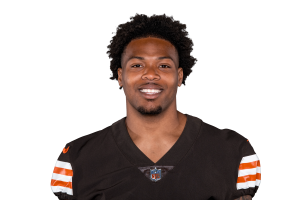
Thomas
Graham Jr..
 Oregon· 5'10"· 192 lb· 4.49s 40
"A 5'10", 192-lb Oregon boundary corner with three years of Pac-12 starting tape and eight career interceptions, undersized after opting out of 2020 — a Day 3 nickel projection where instincts and ball production carried the file."Pre-draft read
Press-off corner who works best in off-man and quarters coverage, relying on route recognition to attack the football. He plays with a low pedal and keeps his frame square through the top of routes, driving on comebacks and curls with anticipation. His ball-in-the-air demeanor stands out; he tracks the arc, high-points with body control, and produces turnovers.
He comes downhill willingly against outside zone and screens, breaking down under control and wrapping at the ankles. Limitations are physical, including average short-area quickness out of transitions and ordinary recovery speed. He can also be bodied by larger receivers on 50-50 balls.
Fangio two-high schemes that prioritize zone coverage, pattern reading, and ball skills, operating with aggressive downhill triggers from off-coverage alignments.
Year 1 slot/nickel with potential to develop into a high-IQ starter in zone-heavy systems.
Man-heavy press-bail schemes that demand sustained vertical speed and length from boundary corners.
A high-instincts, high-production corner whose physical limitations point towards a long-term inside nickel role in zone-based defenses.
🔥🔥 Oregon Defensive Back | Thomas Graham JR.
Game film cut-up of Thomas Graham Jr.'s Oregon tape.
Thomas Graham Jr. 2019 Junior year Oregon Highlights
Game film cut-up of Thomas Graham Jr.'s Oregon tape.
Thomas Graham Jr Highlights
Game film cut-up of Thomas Graham Jr.'s Oregon tape.
Oregon's three-year starter projects as a versatile slot nickel due to his impressive instincts and refined ball skills. His consistent production disrupting passing lanes and effectiveness in run support establishes a solid floor for a reliable, high-IQ defensive back. With extensive Power-Five reps, he demonstrates immediate readiness for an NFL secondary, offering dependable coverage and run support from day one.
His collegiate career at Oregon featured significant usage and durability, with 39 starts from 2017-2019. This consistent presence at a major program underscores his reliability and football acumen. As a Duck, he accumulated eight interceptions and 34 pass breakups, distinctively showcasing his innate ability to impact the passing game. His final game tape was the 2019 season; he opted out of 2020.
Evaluators noted average recovery speed and lack of elite length as concerns, potentially limiting his ceiling in schemes demanding exceptional explosiveness or reach against larger pass-catchers. The 2020 opt-out created a substantial gap in recent live film, contributing to a measurable slide from initial mid-Day 2 projections to a sixth-round, 228th overall selection.
- 01
Ball production
Achieved eight career interceptions and 34 pass breakups across three seasons, demonstrating consistent play-on-ball volume and high-pointing skill.
- 02
Route anticipation
Reads the quarterback's eyes and receiver's stem out of a patient pedal, triggering on routes with timing to contest completions.
- 03
Off-coverage adaptability
Comfortable in off-man and quarters, maintaining vision on the receiver and mirroring breaks with balanced hips to limit explosive gains.
- 04
Track record of starts
Started as a true freshman and sustained his role for 39 games, providing significant evaluative volume against Power-Five competition.
- 05
Willingness in run support
Fills the alley without hesitation and breaks down under control on outside runs, engaging stalk blocks with leverage and technique.
- 01
Below-standard length
Measured 5'10" with average arm length, allowing larger boundary receivers to wall him off on back-shoulder throws and 50-50 balls.
- 02
Ordinary recovery speed
His 4.49 forty-yard dash time is functional but not special, and he loses ground vertically when guessing wrong or getting stacked.
- 03
Average short-area burst
Shows anticipation more than sudden foot quickness out of transitions, which will be tested by NFL separators at the top of routes.
- 04
2020 opt-out gap
Sat out the pandemic-shortened Pac-12 season, meaning his most recent live game tape was more than 15 months old at the time of the draft.
— — — positional median (p50)
- 40 yd
- 4.49sp50
- Vertical
- 34inp50
- Broad jump
- —in
- Three-cone
- —s
- Shuttle
- —s
- Bench
- 13repp50
| Yr | Team | G | Tkl | Sk | Int | PD | FF |
|---|---|---|---|---|---|---|---|
| 2017 | Oregon | 13 | 62 | 0 | 3 | 4 | 0 |
| 2018 | Oregon | 13 | 42 | 0 | 3 | 17 | 0 |
| 2019 | Oregon | 13 | 64 | 0 | 2 | 10 | 0 |
| Career | — | 39 | 168 | 0 | 8 | 31 | 0 |
A dash means the figure is not published by a source we trust — never a zero we invented.
Late Day 3 Power-Five boundary corner who bounced between practice squad and back-end roster spots as a depth outside corner and core-four teams contributor.
Undersized boundary corner turned high-value NFL nickel whose instincts, route anticipation and ball skills played up inside — the healthy version of the projection.
Undersized zone corner who never carved out a stable coverage role and drifted through camps and practice squads on athletic profile alone.
Everything above is the pre-draft evaluation. This section is what actually happened — updated year over year.
Pre-draft context. Thomas Graham Jr. arrived in Eugene as a four-star cornerback from Rancho Cucamonga, California, in the 2017 class and started as a true freshman, which framed the entire evaluation: a three-year, 39-game Oregon starter with 200-plus tackles, eight interceptions and 34 pass breakups by the end of the 2019 season. He measured 5'10", 192 pounds at his pro day with a 4.49 forty, a 34-inch vertical and 13 bench reps — a solid, unremarkable boundary-corner profile behind receivers who had gained ground on him athletically. The 2021 combine cancellation and his own decision to opt out of the pandemic-shortened 2020 Pac-12 season meant scouts were grading a body of work already more than 15 months old on draft weekend, and consensus boards that had him as a mid-Day 2 corner in the fall of 2019 slid him toward the back half of Day 3 with instincts, ball production and starting reps as the argument.
NFL fit — Chicago Bears. The Bears selected Graham 228th overall in the sixth round of the 2021 draft, their first defensive move of the class, betting on a plug-in nickel behind Jaylon Johnson and Kindle Vildor. Chicago spent 2021 developing him on the practice squad and elevated him for spot duty, and he saw his first meaningful defensive snaps in relief roles across 2021 and 2022 before injuries and roster churn cut into his window. He never captured the inside nickel job the profile pointed to at Oregon; the depth chart and team strategy reset the CB room around younger athletic tools rather than his instincts-first game.
Retrospective. Four years in, Graham is a journeyman defensive back who has bounced between the Bears, practice squad stints and short stops around the league without ever locking down an NFL coverage role — a Day 3 corner whose ball production carried the pick but whose length, recovery speed and 2020 gap year all showed up once the coverage windows tightened at the next level. In the pick #228 range of the sixth round the Bears bought optionality on a starter's résumé; the honest scouting read is that the ceiling capped at spot-nickel and core teams reps, and the miss on this ticket is small — it never asked to be more.