
Payton
Turner.
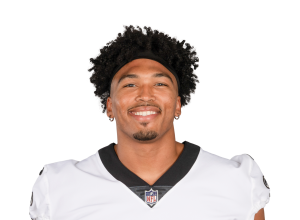
Payton
Turner.
 Houston· 6'5"· 268 lb
"A frame, a wingspan and a five-game sample. A modern five-technique projection built on Senior Bowl reps and pro-day testing rather than sustained college production — high floor as a role player, boom-or-bust as a rusher."Pre-draft read
He aligns as a base end or five-technique, and his game centers on length, power, and setting the point of attack in the run game. His primary pass-rush tool is the bull rush; his bend and hand plan are not yet fully developed. He is more effective as a stand-up outside in sub packages than as a wide-9 in a pure pass-rush front.
His value is tied to a scheme fit as a heavy-set edge or interior hybrid player, rather than as a stand-alone finisher. He can utilize his length to keep tackles off his frame and disengage on run downs with a long-arm. He plays with hand placement and leverage to hold C-gap integrity against tight-end blocks.
New Orleans Saints' wide-9 attacking front with a focus on penetrating the offensive line and generating pressure from the edges.
A Year 1 rotational run defender who can set a hard edge on early downs, developing into a stand-up outside rusher in sub packages with his bull rush and inside moves.
A traditional two-gap 3-4 defense that asks linemen to absorb and hold blocks, rather than attack and penetrate.
Turner's length and power make him a valuable asset in a penetrate-first defense where he can disrupt run schemes and collapse the pocket, despite his unrefined pass-rush repertoire.
Payton Turner — Houston 2020 highlights
The shortened senior year that vaulted him into Round 1: 5 sacks, edge-setting reps and Senior Bowl-caliber tape.
Payton Turner — Senior Bowl reps
The week that made him a first-round name: length, bull rush and interior/exterior versatility on display.
Payton Turner — Saints rookie season flashes
NFL debut season snippets before injuries derailed the arc.
Turner was projected as a five-technique with rush upside, capable of setting the edge in the run game and collapsing the pocket as a stand-up rusher in sub packages. His evaluation hinged on his frame and athletic testing, including his 4.79 forty time, rather than a significant body of dominant college tape, suggesting a potential role in a 30-front defense.
He arrived at the Senior Bowl as a former basketball player at Houston, having started just over 20 college games. His 2020 season, though shortened, featured five sacks in five games, which contributed to his rise in draft stock. He demonstrated interior and exterior versatility during his collegiate career.
Concerns among evaluators focused on his undeveloped pass-rush plan and average bend, along with the limited sample size of his top-tier performance. He was considered a Day 2 prospect in some assessments, but his traits and interviews led to first-round consideration, ultimately being selected 28th overall by the New Orleans Saints.
- 01
Rare length profile
6-6 with 34-inch arms at 268 pounds; among the longest edges in the class, allowing him to keep tackles off his frame and disengage on run downs with a simple long-arm.
- 02
Power-rush upside
real bull-rush conversion, walks tackles into the quarterback with the long-arm and stab-jerk, and consistently collapses the pocket even when he does not finish the sack.
- 03
Run-defense sturdiness
plays with hand placement and leverage that lets him hold the C-gap against tight-end blocks, spill kick-out blocks and reduce inside to two-gap when the scheme asks.
- 04
Positional flexibility
reps in an odd front from 3-technique to 5-technique at Houston; length and mass let him kick inside on passing downs, offering coordinators a chess piece up front.
- 05
Growth trajectory
five sacks in five games as a senior after a slower development curve; the arrow is pointing up as he adds pass-rush counters to his power base.
- 01
Get-off and bend
average first-step quickness and heavy-legged corner turn; struggles to threaten the arc as a pure speed rusher, so wins will need to come inside-out with his hand usage.
- 02
Small production sample
one full season of high-end tape; 2020 came against Group of Five competition and totaled only a handful of games, so the projection outruns the confirmed résumé.
- 03
Level of competition
AAC schedule with limited exposure to premier tackle play; how his hands and plan translate against NFL sets versus college kick-slides is a real projection question.
- 04
Pass-rush plan
leans heavily on the long-arm as the primary and secondary win right now; needs a genuine counter (inside spin, cross-chop) to keep tackles honest through a full NFL season.
— — — positional median (p50)
- 40 yd
- —s
- Vertical
- 35.5inp50
- Broad jump
- —in
- Three-cone
- 6.98sp50
- Shuttle
- 4.33sp50
- Bench
- 23repp50
| Yr | Team | G | Tkl | Sk | Int | PD | FF |
|---|---|---|---|---|---|---|---|
| 2017 | Houston | 10 | 14 | 1 | 1 | 1 | 0 |
| 2018 | Houston | 11 | 42 | 0 | 0 | 4 | 0 |
| 2019 | Houston | 12 | 34 | 4 | 0 | 4 | 0 |
| 2020 | Houston | 5 | 25 | 5 | 0 | 0 | 0 |
| Career | — | 38 | 115 | 10 | 1 | 9 | 0 |
A dash means the figure is not published by a source we trust — never a zero we invented.
Big base end with run-defense value and enough reduced rush ability to stay on the field in multiple packages.
Inside/outside defensive line mismatch whose length, power and alignment flexibility create problems when the technique catches up.
Traits-over-production edge whose development and availability decide whether he becomes more than a rotational body.
Everything above is the pre-draft evaluation. This section is what actually happened — updated year over year.
Selected 28th overall by the New Orleans Saints, Payton Turner's career was defined almost entirely by injuries. He appeared in 27 games over four seasons with the Saints, totaling just 3.5 sacks as recurring knee, foot and shoulder issues never allowed a full 17-game workload. New Orleans declined his fifth-year option in May 2024 and released him after the 2024 season. He signed a one-year deal with the Chicago Bears in the 2025 offseason in a bid to reset his career as a rotational base end. He earned no Pro Bowl selections and, as of 2025, stands as one of the clearest first-round misses of the 2021 class — a length-and-frame projection whose ceiling was never revealed because he could not stay on the field.
The Saints' selection of Payton Turner at 28 was a classic New Orleans move — a length-and-frame bet on a Senior Bowl riser with a defined role, made by a franchise that has historically trusted its ability to develop unfinished edge players. The pre-draft file was thin on production but thick on projection: 6'6", 268 pounds with 34-inch arms, a nasty bull rush on tape, and enough interior versatility to slide into a heavy front on early downs. Houston's abbreviated 2020 flashed the tools without settling the ceiling, and the industry's read was that Turner would be a Day 2 name in a normal cycle, pushed into Round 1 by the traits and the interview.
The professional experience never let the evaluation breathe. Turner's first four seasons in New Orleans were a running catalog of injuries — a knee/quad that shelved most of his 2022, a foot fracture that ended his 2023 after two games, and a season-ending shoulder tear in 2024. Between injuries, the flashes were real but scattered: quality run defense reps, a couple of pocket-collapsing bulls, and enough tools on tape to keep the "when healthy" argument alive. He never got to string a full season together, and the Saints declined his fifth-year option in the spring of 2024, effectively closing the book on him as a first-round outcome. New Orleans released him in a cost move and he signed a one-year deal to try to salvage the arc.
In the rearview, Turner is one of the cleaner examples in this class of a pick that couldn't answer its own central question. He was drafted on projection because the college tape didn't offer enough reps to answer it, and injuries then made it impossible for the pro tape to answer it either. There's still a functional NFL role player buried in there — a length-and-power run defender with situational rush utility — but the first-round grade required the frame to translate into an edge-setting starter who won consistently on Sundays, and that version of Turner never made it into a full season of tape. A cautionary case for taking limited-sample traits bets in the back half of Round 1.