
Mark
Webb.
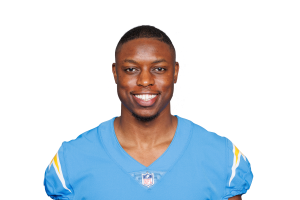
Mark
Webb.
 Georgia· 6'1"· 207 lb· 4.61s 40
"A 6'1", 207-pound converted receiver at Georgia with special-teams value and a 7.42 RAS profile, but limited coverage reps and average ball production made him a Day 3 developmental strong-safety projection."Pre-draft read
He aligns as a big nickel and strong safety, best utilized as a downhill run-support defender from split-safety or single-high shells where his eyes can start in the box. His best trait is his trigger from depth on run reads, closing to the alley with square shoulders and finishing with wrap tackles. He rarely launches into hits.
His receiver background shows in his hands and eyes; he tracks the ball naturally on deep-half rotations and shows soft hands. In man coverage, he is functional against tight ends and backs on short-area routes. However, his hip-flip is late, and he opens too early against sudden route stems, which forces him into recovery when facing separation-quick slots.
Webb projects best in a split-safety or single-high Cover-3 scheme, where his box-safety instincts and alley-run support can be maximized without taxing his deep-half range.
Year 1 core special-teams contributor with the ceiling to evolve into a sub-package big nickel or strong safety who excels in run support.
Pure single-high center-field roles in Cover-1 or Cover-3, where his range limitations and average deep-third burst would be exposed and exploited by downfield receivers.
Webb's athleticism and former wide receiver background make him a valuable special teams and strong safety prospect, but his coverage deficiencies limit his fit in range-dependent deep roles.
Draft Dreams: ‘Pride of Mount Airy' Mark Webb Plays Football in Honor of His Late Grandfather
Game film cut-up of Mark Webb's Georgia tape.
Mark Webb finally gets one!
Game film cut-up of Mark Webb's Georgia tape.
Mark Webb Drops Pick 6 | CFB Highlights
Game film cut-up of Mark Webb's Georgia tape.
Mark Webb projects as a downhill strong safety with valuable special-teams versatility, offering a clear role as a core-four gunner with developmental upside as a sub-package big nickel. His SEC background and experience at a premium program provide a solid foundation for his transition, with a pro-day 4.61 forty time suggesting sufficient athleticism for coverage duties.
Webb arrived at Georgia as a wide receiver and successfully transitioned to safety, becoming a starting strong safety in Georgia's defense. While his interception and pass-breakup totals were modest, he earned trust on early downs and was a consistent contributor on special teams throughout his college career, highlighting his reliability and positional growth within the system.
Evaluators consistently projected Webb in the seventh-round tier, recognizing his strong special-teams floor and intriguing positional switch but tempering expectations due to limited splash plays and a perceived ceiling in man coverage. The Los Angeles Chargers ultimately selected him with the 241st pick, banking on his pedigree, receiver background, and potential for development.
- 01
Ball skills
Former receiver traits show in how naturally he tracks the ball over his shoulder and attacks the catch point on deep-half rotations, an unusual finish for a converted defender.
- 02
Downhill trigger
Reads run keys quickly from the second level and closes to the alley with square shoulders, arriving as a wrap tackler with reliable contact balance through blockers.
- 03
Special-teams projection
Real gunner and core-four value, with speed to cover kicks, strong hands to shed vises and reliable pursuit angles that carried directly onto NFL practice-squad reps.
- 04
Testing profile
A 4.61 forty, 36.5-inch vertical and 136-inch broad jump at 207 pounds produced a 7.42 RAS, athletic enough to defend the seam on split-safety rotations at the next level.
- 05
Football character
Multi-year Georgia contributor under an NFL-style secondary coach, trusted as a communicator on the back end and a captain-track presence in a high-standard program.
- 01
Hip fluidity
Change-of-direction is average for a defensive back; his hips are late to open on sudden stem breaks, which forces him into recovery mode against separation-quick slots.
- 02
Man-coverage ceiling
Functional on tight ends and backs but exposed on true separators, and evaluators questioned whether he could ever be a matchup answer against NFL-level slot receivers.
- 03
Ball production
Modest interception and pass-breakup totals in a defense that generated plenty of takeaways left evaluators without a splash-play highlight reel to sell the coverage traits.
- 04
Range limitation
Not a true single-high center-fielder; the deep-third range and closing burst on posts are average, which caps the scheme fit to strong-safety-first roles.
Relative Athletic Score (Kent Lee Platte) benchmarks combine/pro-day numbers against every measured prospect at the position since 1987. 10.00 is elite; 5.00 is average.
— — — positional median (p50)
- 40 yd
- 4.61sp50
- Vertical
- 36.5inp50
- Broad jump
- 136inp50
- Three-cone
- 7.30sp50
- Shuttle
- 4.52sp50
- Bench
- —rep
| Yr | Team | G | Tkl | Sk | Int | PD | FF |
|---|---|---|---|---|---|---|---|
| 2017 | Georgia | 13 | 1 | 0 | 0 | 0 | 0 |
| 2018 | Georgia | 14 | 14 | 0 | 0 | 3 | 0 |
| 2019 | Georgia | 12 | 46 | 0 | 0 | 3 | 0 |
| 2020 | Georgia | 9 | 21 | 0 | 1 | 2 | 0 |
| Career | — | 48 | 82 | 0 | 1 | 8 | 0 |
A dash means the figure is not published by a source we trust — never a zero we invented.
Downhill strong safety with special-teams value and a coverage ceiling capped by hip fluidity, exactly the box-first profile evaluators saw.
Best case is a converted athlete who grew into a rangy strong safety and full-time starter — an aspirational ceiling rather than a projection.
Athletic Power-Five safety who never carved out a defensive role and bounced around practice squads on special-teams-only value.
Everything above is the pre-draft evaluation. This section is what actually happened — updated year over year.
Pre-draft context. Mark Webb arrived at Georgia as a receiver and was converted to safety as a redshirt, then grew into a full-season starter in a strong secondary. He was never a splash-play centerpiece in Athens — modest interception totals in a defense that generated plenty of takeaways elsewhere — but the team trusted him on early downs and on core special-teams units. Pro-day testing at 6'1", 207 pounds produced a 4.61 forty, 36.5-inch vertical, 136-inch broad and 7.30 three-cone for a 7.42 RAS profile that projected as a coverage-capable strong safety rather than a true center-fielder. The consensus board slotted him firmly in the Day 3 developmental strong-safety and special-teams-body tier.
NFL fit — Los Angeles. The Chargers took him at pick 241 for a defense that had cycled through safety bodies for years, betting on the SEC pedigree, the receiver background and a special-teams floor as a gunner while he learned the position. The role at signing was clear: earn a core-four helmet as a rookie, buy time to develop the coverage reps, and see if he could grow into a sub-package big-nickel two or three seasons out.
Retrospective. Webb tore his patellar tendon in rookie training camp and missed the entire 2021 season, which set the developmental clock back before he had run a defensive snap in Los Angeles. He was waived during the 2022 cycle and spent the next two years bouncing between practice squads, without producing meaningful defensive snaps at the next level. The pick returns are consistent with the seventh-round baseline shifted a full grade down by injury — a developmental body who never got the on-field runway to prove out the projection.