
Deommodore
Lenoir.
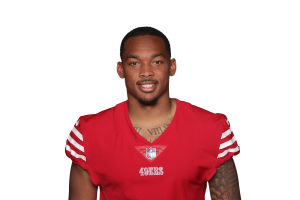
Deommodore
Lenoir.
 Oregon· 5'10"· 199 lb· 4.48s 40
"A 5'10", 199-pound Oregon boundary corner with 43 career starts and legit ball production, capped by short arms and average long speed — a Day-3 outside/nickel projection banking on mirror quickness and toughness."Pre-draft read
He aligns as a boundary corner, demonstrating patient hands in press-bail and fluid weight transfer at the top of the stem. He mirrors short-area breaks with urgency and trusts his eyes on route concepts, squatting and driving on comebacks and curls. He closes with above-average burst, punching through the catch point, often playing through the receiver's hands. As a tackler, he takes on stalk blocks with leverage and shows up in the alley.
Limitations arise when matched stride-for-stride against true vertical threats without safety help. His shorter arms can be a problem on contested throws to larger X receivers. He can be susceptible to double-moves if he over-commits on early tape reads. However, his play strength, tempo, and eye discipline are notable.
Fangio two-high schemes, popularized by teams like the San Francisco 49ers, prioritize versatile defensive backs who can align in 2-high shells and execute various coverage concepts.
Year 1 slot/nickel defender who can quickly ascend to a starting outside CB role, primarily in a match-zone or bracket-heavy scheme.
Man-heavy schemes that force him to consistently cover elite deep threats on an island without safety help.
A physical, instinctive corner with excellent short-area quickness and ball skills, best utilized in schemes that leverage his versatility in match concepts and provide safety over the top against elite vertical threats.
Deommodore Lenoir Oregon career highlights
Boundary reps, PBUs and run-fits across three Oregon seasons.
Lenoir 49ers coverage tape
NFL reps showing plant-and-drive and match-coverage instincts.
Lenoir every-target breakdown
All-22 style cut of Lenoir's target reps as an outside corner.
Lenoir projects as a durable boundary corner, offering a combination of competitive toughness and short-area quickness suitable for match or bracket-heavy schemes. His ability to drive on routes and play through the catch point suggests he can contribute early, particularly in situations that demand a physical presence against the run and reliable coverage on intermediate routes.
He was a four-year starter at Oregon where he consistently demonstrated versatility across multiple coverage schemes, including Cover-3 match, quarters, and man. His usage included snaps both outside and in the slot, allowing him to accumulate 6 interceptions and 25 pass breakups over his career, showcasing legitimate ball skills in the Pac-12. His performance earned him a Senior Bowl invite.
Evaluators consistently placed him as a Day 3 prospect, with consensus in the 4th-5th round. Concerns revolved around his arm length and long speed, which were seen as limiting factors against elite vertical threats, making him scheme-dependent in some matchups. Ultimately, he was drafted 172nd overall by San Francisco, indicating a bet on his cover skills, toughness, and special teams potential.
- 01
Short-area mirror
Elite plant-and-drive ability for a boundary corner, displaying quickness against Pac-12 quick-game routes and closing on comebacks and hitches with notable urgency.
- 02
Ball production
25 career pass breakups and 6 interceptions over 43 starts, consistently playing through the receiver's hands rather than reacting late, resulting in legitimate PBUs.
- 03
Run support and tackling
A willing and physical player who defeats stalk blocks and fills the alley with leverage, consistently tackling low and wrapping up without avoiding contact.
- 04
Press-bail technique
Exhibits patient hands in off-press coverage with clean weight transfer, avoiding false steps and using fluid hips to play both true off and disguised press.
- 05
Football character and starts
Four-year starter and team captain, noted for his preparation, film study, and willingness to cover top receivers, providing a high floor for Day 3 investment.
- 01
Arm length
His 30 3/8-inch arms are shorter than typically preferred for NFL corners and manifest in contested-catch situations against bigger X receivers, limiting disruption when arriving late.
- 02
Long speed
His 4.48 forty time indicates functional but not elite speed, which can be exploited by true 4.35 vertical threats on nine routes without safety support or on double-moves.
- 03
Height and catch-radius mismatch
At sub-71 inches, he is at a geometric disadvantage on fade and back-shoulder routes against receivers measuring 6-3 or taller, often requiring bracket coverage.
- 04
Aggressive eye discipline
On tape he occasionally over-commits to initial stem cues, biting on double-moves, a tendency that could be further exploited by complex NFL route combinations.
Relative Athletic Score (Kent Lee Platte) benchmarks combine/pro-day numbers against every measured prospect at the position since 1987. 10.00 is elite; 5.00 is average.
— — — positional median (p50)
- 40 yd
- 4.48sp50
- Vertical
- 34.5inp50
- Broad jump
- 121inp50
- Three-cone
- 7.02sp50
- Shuttle
- 4.35sp50
- Bench
- 15repp50
| Yr | Team | G | Tkl | Sk | Int | PD | FF |
|---|---|---|---|---|---|---|---|
| 2017 | Oregon | 13 | 25 | 0 | 1 | 5 | 0 |
| 2018 | Oregon | 13 | 44 | 0 | 3 | 8 | 0 |
| 2019 | Oregon | 14 | 46 | 0 | 1 | 7 | 0 |
| 2020 | Oregon | 7 | 30 | 0 | 1 | 0 | 0 |
| Career | — | 47 | 145 | 0 | 6 | 20 | 0 |
A dash means the figure is not published by a source we trust — never a zero we invented.
Scheme-diverse Day-3 corner with 4th/5th CB starter equity, best when the coverage shell hides length limitations.
Undersized but sticky boundary/nickel hybrid with plus mirror quickness and route recognition — Callahan's functional starter arc is the high-end outcome.
Special-teams-first depth corner whose starts come from injury rather than ascension — the pathway if the long-speed flag proves fatal.
Everything above is the pre-draft evaluation. This section is what actually happened — updated year over year.
Pre-draft context. Lenoir arrived at Oregon as a four-star recruit and started 43 games across four seasons on the boundary, finishing his career with 6 interceptions, 25 pass breakups and a Senior Bowl invite. He measured 5'10", 199 with sub-31-inch arms, then ran 4.48 with a 34.5-inch vertical, 121-inch broad, 7.02 three-cone and 4.35 shuttle at Oregon's pro day (RAS 7.82). Boards had him as a Day-3 outside/inside hybrid: enough foot quickness and physicality to survive, but length and top-end speed were real questions against NFL vertical threats.
NFL fit — San Francisco 49ers. San Francisco took him at 172 in Round 5, targeting a scheme-diverse corner for a Cover-3/match system. He worked his way from rotational to starter by 2022, then broke out in 2023 as the outside CB2 on a Super Bowl LVIII run, holding up in bracket and Cover-3 against elite WR1 assignments. In 2024 he added a Pro Bowl-caliber season with multiple takeaways; he signed a five-year, $92M extension in the 2025 offseason.
Retrospective. One of the true Round-5 wins of the class. The length and long-speed flags priced him out of Day 2, but the traits that mattered on Sundays — competitive toughness, plant-and-drive quickness, ball skills — translated cleanly. A steal that reshaped how San Francisco staffs the perimeter.