
Demetric
Felton.
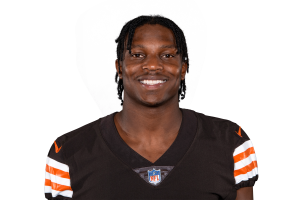
Demetric
Felton.
 UCLA· 5'8"· 189 lb· 4.55s 40
"A 5'8", 189-pound UCLA wide-receiver-turned-running-back with a 4.55 forty and legitimate route feel — a Day 3 satellite-back and return bet where the profile only survives if the pass game and special teams cash in."Pre-draft read
He aligns in the slot, out of the backfield on third-and-long, and behind quarterbacks on gap-scheme edge runs. He runs with a low pad level and a compact, stout base, arriving at contact with pop on inside zone when the crease is clean. His vision is one-cut; he plants once and squares his shoulders without hunting a bounce, making him effective on short-yardage.
In the pass game, his receiver background is evident. He runs developed routes, sinks his hips at the top of option breaks, and offers a real catch radius with quiet hands. His long speed is average, relying on setup and lane rather than pure top gear. He does not stack consistent pass-protection reps against edge rushers or offer between-tackles power for loaded boxes, needing designed touches or a numbers advantage in space to create separation.
Any spread RPO, Shanahan wide zone, or West Coast timing offense that specializes in creating manufactured touches for slot-aligned players and backs who split out wide.
Immediate special teams contributor as Year 1 kick returner and depth sub-package/third-down back; ceiling is a high-volume receiving option out of the backfield or slot.
Gap/duo power run games that require between-tackles running from their third-down back, or offenses that expect their running back to be a primary pass-protector.
Felton projects as a versatile offensive weapon whose receiving background and special teams value will carve out a role in schemes that prioritize playmaking over traditional size thresholds.
UCLA RB Demetric Felton Highlights
UCLA highlight reel — jet motion, slot routes and the 100-yard kickoff return.
2021 NFL Draft Profile: UCLA running back Demetric Felton
Pre-draft breakdown of the receiver-to-back conversion and satellite projection.
Best Pass Catching RB 2021 NFL Draft — Demetric Felton (UCLA) Film Study
Route-stem and hands-focused study of his passing-down usage.
He projects as a third-down and sub-package back, with a specialization in receiving work. His value stems from his versatility to line up in the slot and his route-running ability, offering a real pass-game threat. At 5'8" and 189 pounds, evaluators recognized his stout base and low center of gravity, which allowed him to absorb contact and finish runs falling forward more often than expected for a back of his build.
He transitioned to running back full-time in 2019 after two seasons as a wide receiver for UCLA. In his senior year, he rushed for 668 yards at 6.4 yards per carry and added 159 receiving yards on 22 catches, along with a 100-yard kickoff return touchdown. This three-phase college profile showcased his ability to contribute as a runner, receiver, and returner. He was frequently deployed in diverse roles, including outside receiver, slot, wildcat quarterback, and traditional tailback.
His size was a concern for a primary running back role, and his 4.55 Pro Day forty time was considered average for a satellite back. The lack of public agility numbers in his athletic file was also noted by scouts. Despite these flags, his receiving background and special teams contributions secured him a consensus grade in the fifth-to-seventh round range, leading to his selection at pick #211.
- 01
Receiving package
Two full seasons as a UCLA slot receiver show in his route stems, hip sink at breakpoints, and quiet, extended hands, differentiating him from typical college RBs.
- 02
One-cut vision
Reads the front side of zone quickly, plants once, and squares his shoulders without seeking a bounce, minimizing negative plays on short-yardage carries.
- 03
Return value
A 100-yard kickoff return touchdown and a Pac-12 Special Teams Player of the Week award underline his real third-phase profile.
- 04
Compact frame under pads
At 5'8", 189 pounds, he plays with a lower center of gravity than expected, absorbing initial contact and consistently falling forward.
- 05
Contact-balance through arm tackles
Consistently shrugs single-arm swipes in space, especially on screens and swing routes, driving forward for extra yards after initial contact.
- 01
Size for volume
His 5'8", 189-pound frame is below the threshold for lead backs, and he did not test as an elite athlete in jumps or shuttles.
- 02
Long speed cap
His 4.55 Pro Day forty time is average, meaning his best plays often depend on setup and lane rather than pure top-end burst.
- 03
Pass-protection projection
He did not stack reps against college edge rushers, and his frame limits how much anchor he can develop for NFL pass protection.
- 04
Between-tackles ceiling
He struggles when forced inside on power or duo runs against loaded boxes, where his yards after contact diminish quickly.
Relative Athletic Score (Kent Lee Platte) benchmarks combine/pro-day numbers against every measured prospect at the position since 1987. 10.00 is elite; 5.00 is average.
— — — positional median (p50)
- 40 yd
- 4.55sp50
- Vertical
- —in
- Broad jump
- —in
- Three-cone
- —s
- Shuttle
- —s
- Bench
- —rep
| Yr | Team | G | Att | Yds | TD | Rec | RecYds |
|---|---|---|---|---|---|---|---|
| 2017 | UCLA | 12 | 10 | 75 | 1 | 2 | -2 |
| 2018 | UCLA | 12 | 5 | 27 | 0 | 20 | 207 |
| 2019 | UCLA | 12 | 86 | 331 | 1 | 55 | 594 |
| 2020 | UCLA | 6 | 132 | 668 | 5 | 22 | 159 |
| Career | — | 42 | 233 | 1101 | 7 | 99 | 958 |
A dash means the figure is not published by a source we trust — never a zero we invented.
A Day-3 back who fits behind a set starter, carves out a hybrid role in flashes and stays on rosters longer than his measurables suggest without ever owning the passing-down job.
The realistic ceiling: a decade-long career as a slot-eligible third-down back with 40-plus catches in a good year and a defined package that outlasts several head coaches.
The floor if the RB conversion does not fully take: a receiver-body who bounces between practice squads and end-of-roster spots based on injury and return-game need.
Everything above is the pre-draft evaluation. This section is what actually happened — updated year over year.
Pre-draft context. Felton spent his first two UCLA seasons at receiver before Chip Kelly moved him into the backfield in 2019, and the 2020 tape is the defining sample — 668 rushing yards at 6.4 a pop over just seven Pac-12 games, 22 catches for 159 yards and that 100-yard kickoff return against Cal that scouts remembered as much as any of his carries. He measured 5'8" and 189 pounds at UCLA's Pro Day with a 4.55 forty, a stout lower half and no vertical or agility numbers on his public record, so the athletic file leaned on the tape rather than a full workout. Consensus grades landed in the fifth-to-seventh round with the receiving background and special-teams flash as the argument.
NFL fit — Cleveland Browns. Cleveland spent pick #211 on him as a Duke Johnson-style hybrid, slotting behind Nick Chubb and Kareem Hunt where his snaps could come almost exclusively from the slot, in motion and on returns. The vision worked in flashes: he made the initial 53, carved a package on jet motion and screen looks in 2021, and the Browns kept re-adding him to the roster through 2023. He never took over the passing-down role, though — Cleveland kept mixing veterans into that job — and the return work stayed inconsistent.
Retrospective. His career settled in as a rotational backup and camp body who briefly resurfaced with the Cardinals and Panthers, useful when a roster needed a slot-eligible back for a week but never carved out a defined NFL role. The bet on the receiving traits was reasonable at the price, and he stuck in the league longer than most of his tier, but the ceiling scouts hoped for — a modern satellite piece who forced coverage adjustments — never materialized.